

ABOUT

PetiteCare opened our doors in February 2015, and since then, we have supported hundreds of children to learn and grow through our nature-based child care programs here in East Toronto.
Every day, children are encouraged to follow their curiosity, build confidence, take safe challenges, connect with their community, and develop a lifelong relationship with nature, learning, and well-being. Guided by caring educators who meet each child where they are, we create an environment where children feel safe, seen, and inspired to grow in every season.
At PetiteCare, we believe childhood is meant to be experienced with wonder, movement, connection, and joy.

PHILOSOPHY

Our Approach to Learning
Curiosity and Meaningful Relationships.
We believe children learn best through experience, curiosity, and meaningful relationships. Rather than viewing education as something delivered to children, we see learning as something children actively participate in. Our educators observe closely, listen carefully, and create opportunities that respond to children’s interests, questions, and developmental needs. Sometimes learning begins with a question. Sometimes it begins with a stick, a puddle, a butterfly, or a conversation between friends. Through thoughtful planning and intentional observation, our educators turn everyday moments into opportunities for discovery, problem-solving, creativity, and connection. This is what we mean by whole-child education: supporting not only cognitive development, but also physical, social, emotional, and creative growth.

Beliefs About
Movement
Confidence Builds a Bigger World
This is why even our youngest children spend time outdoors. Infants explore natural materials, uneven surfaces, logs, sand, and open-ended environments designed to support curiosity and physical discovery. As children grow, these experiences expand into neighbourhood walks, nature exploration, climbing, balancing, building, and increasingly complex challenges. We believe children benefit from opportunities to take age-appropriate risks in carefully designed environments. Rather than removing every challenge, we help children learn how to navigate challenges safely. Through these experiences, children learn one of the most powerful lessons of all: “I can do hard things.”
Movement is Learning
Physical development plays a role in a child's overall growth. When children learn to balance, climb, carry, navigate obstacles, and move confidently through their environment, they are doing far more than developing physical skills. They are building confidence, resilience, judgment, independence, and problem-solving abilities.


Daily Experiences
While each age group experiences the day differently, some things are central to every child's experience at PetiteCare.


Children spend time outdoors every day, in every season. Outdoor experiences support physical health, emotional well-being, sensory development, creativity, and resilience.

Children learn with natural materials such as sticks, rocks, logs, sand, water, leaves, and other open-ended materials. These experiences encourage creativity, problem-solving, collaboration, and imagination.


We believe children are active members of their community. Through neighbourhood walks, local partnerships, field trips, and community projects, children develop a sense of connection to the world around them.


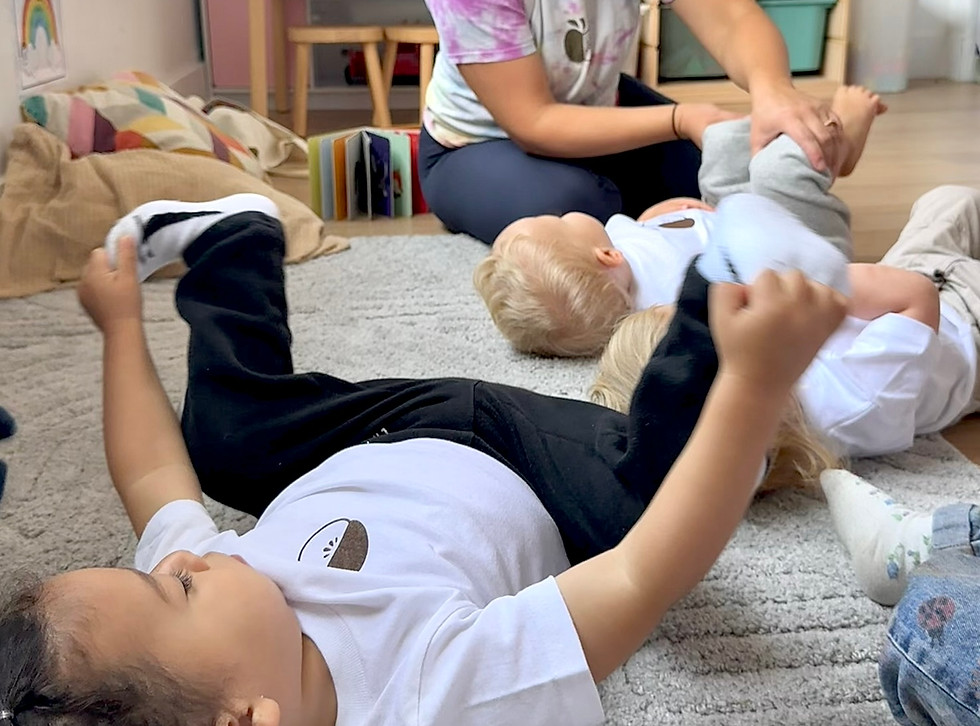
Weekly yoga and mindfulness sessions through Appleseed Yoga help children develop body awareness, emotional regulation, focus, and relaxation skills in fun, engaging ways.


From planting bulbs in the garden to observing butterflies emerge, children are encouraged to ask questions, make observations, and explore the natural world through hands-on discovery.
Food
We believe that food is about much more than nutrition.
Meals are an important part of each child's day. This is a time to connect, explore, develop independence, and build positive relationships with food.
Our in-house cook prepares fresh meals daily using whole ingredients and seasonal produce whenever possible.
We prioritize:
-
Fresh fruits and vegetables
-
Balanced meals and snacks
-
A wide variety of flavours and textures
-
Organic ingredients, whenever available/possible
-
Thoughtfully prepared meals made from scratch
-
One thing families often love to hear is that we never serve the same meal twice. Our menu is intentionally varied to expose children to new foods and experiences throughout the year.
-
Children are naturally curious, and mealtimes provide an opportunity for learning.
Through exposure to a variety of foods, flavours, colours, textures, and cultural traditions, children develop confidence around food and expand their palates from an early age.
Our goal is to help them build a healthy, positive relationship with food that can last a lifetime.
We work collaboratively with families to support each child's individual needs while creating a relaxed and respectful mealtime environment.
Children are actively involved in learning about food systems and sustainability.
Throughout the year, they may:
-
Help care for our garden
-
Observe plants growing through the seasons
-
Participate in composting
-
Learn about food waste reduction
-
Explore connections between nature, food, and community
These experiences help children develop a deeper appreciation for the natural world and the role they play in caring for it.
-
Daily Experiences for All Children
While each age group experiences the day differently, some things are central to every child's experience at PetiteCare.

Children spend time outdoors every day, in every season. Outdoor experiences support physical health, emotional well-being, sensory development, creativity, and resilience.
Children learn with natural materials such as sticks, rocks, logs, sand, water, leaves, and other open-ended materials. These experiences encourage creativity, problem-solving, collaboration, and imagination.
We believe children are active members of their community. Through neighbourhood walks, local partnerships, field trips, and community projects, children develop a sense of connection to the world around them.
Weekly yoga and mindfulness sessions through Appleseed Yoga help children develop body awareness, emotional regulation, focus, and relaxation skills in fun, engaging ways.
From planting bulbs in the garden to observing butterflies emerge, children are encouraged to ask questions, make observations, and explore the natural world through hands-on discovery.

Childhood Belongs Outside
Nature is How we Learn
We believe children learn best through experience, curiosity, and meaningful relationships. Rather than viewing education as something delivered to children, we see learning as something children actively participate in. Our educators observe closely, listen carefully, and create opportunities that respond to children’s interests, questions, and developmental needs. Sometimes learning begins with a question. Sometimes it begins with a stick, a puddle, a butterfly, or a conversation between friends. Through thoughtful planning and intentional observation, our educators turn everyday moments into opportunities for discovery, problem-solving, creativity, and connection. This is what we mean by whole-child education: supporting not only cognitive development, but also physical, social, emotional, and creative growth.
Proven Research
Research continues to demonstrate the benefits of nature-based learning. Time outdoors supports physical health, emotional well-being, attention, sensory development, creativity, and self-regulation. Natural environments invite children to engage all of their senses while helping them feel grounded, calm, and connected. Our commitment to nature extends beyond outdoor play. It influences how we think about sustainability, nourishment, and community. Children help compost food scraps, care for living things, participate in gardening projects, and learn that they are part of a larger ecosystem. Food is approached in much the same way. Fresh meals are prepared in-house daily using whole ingredients, organic whenever possible. We introduce children to a variety of flavours, textures, and foods because nourishment is not only about what they eat but also about helping them develop a positive and curious relationship with food. Whether tending a garden, exploring a ravine, practicing yoga and mindfulness, or sharing a meal together, children learn that they are connected to nature, to their community, and to one another.
Care Is How We Educate
Before children can learn, they need to feel safe.
Before they can explore, they need to feel connected. Before they can take risks, they need to trust the people and environment around them. Every interaction matters. The way we speak to children, respond to their emotions, and support their relationships becomes the foundation for learning. Our educators take the time to understand each child as a whole person (their temperament, interests, strengths, challenges, and ways of experiencing the world). We build trusting relationships, communicate with intention, and create environments where children feel secure enough to explore, learn, and grow.
We are mindful that our impact as educators can last a lifetime.
The words we choose, the boundaries we set, and the relationships we build all shape how children understand themselves and others. Rather than expecting children to fit into a mould, we meet each child where they are.
